Introduction
Mahjong is played all over the world, but not in exactly the same way everywhere. Over time, multiple variants have developed, each with its own rules, scoring model and special combinations.
Commonly used game variants
- MCR (Mahjong Competition Rules) - the international tournament variant.
- Riichi Mahjong - the Japanese variant, with additional risk mechanics such as riichi and dora.
The variant used in this app
This score app is built around the NTS variant:
- NTS (Dutch Tournament Rules) - the official rules used in tournaments in the Netherlands.
- Open the official NTS rules here
This means that the scoring, special situations and combinations in this app mostly follow the Dutch tournament rules.
Deviations from standard NTS
- In this app, the prevailing wind is re-determined every game by dice. In standard NTS play, the prevailing wind normally stays the same for four rounds in a row. We intentionally changed this so a full session does not need to be 16 games, but can be played in 4 games.
- We play with 144 tiles, including flowers and seasons. Original NTS is played without flowers/seasons (136 tiles). In this app, flowers and seasons do count for scoring, but are not part of regular set construction.
What is Mahjong?
What is Mahjong?
Mahjong is a combination game from China. It can be seen as both a mind sport and a social table game. It is usually played by four players, each for themselves.
The goal is to be the first to complete a valid winning hand - Mahjong - while maximizing points.
Objective of the game
Each player tries to:
- build a complete hand
- and, when possible, call Mahjong
A standard winning hand usually consists of:
- 4 sets of 3 tiles (pungs, chows or kongs)
- + 1 pair (2 identical tiles)
There are exceptions (special limit hands), but this is the basic structure for beginners.
Rounds and wind seats
Mahjong uses winds to define positions and game flow:
- East
- South
- West
- North
How Mahjong is similar to card games
In structure, Mahjong is somewhat similar to certain card games:
- you collect sets of tiles
- you try to complete your hand
- you read what others draw and discard
Key differences are:
- you play with tiles instead of cards
- you can claim discarded tiles to complete sets
- there are special combinations, doublings and limit hands
Core idea:
Build efficient sets and complete Mahjong before the others.
The equipment
Mahjong is played with a full tile set, dice, and accessories to define wall setup and wind positions. Below is the equipment model used in this app.
Number of tiles
The complete set has 144 tiles.
Walls are built as four sides, each 18 tiles long and 2 tiles high.
Tile categories
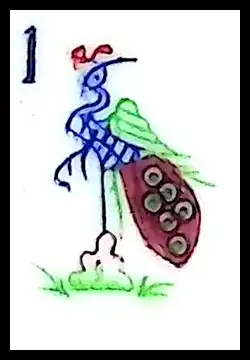
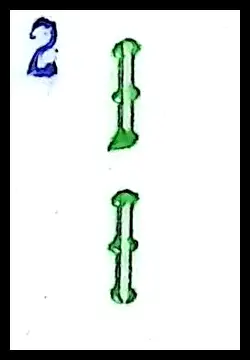
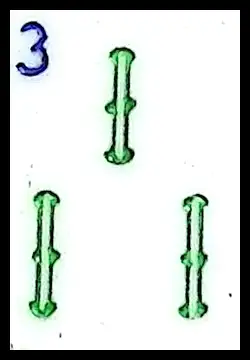
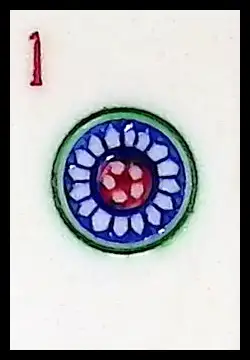
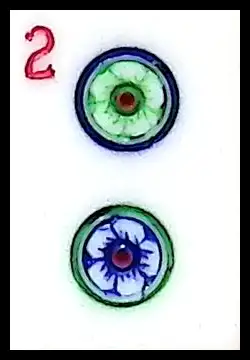
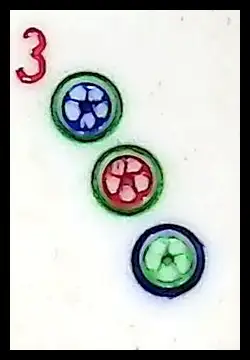
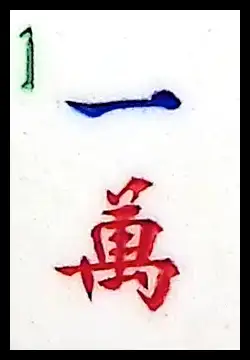
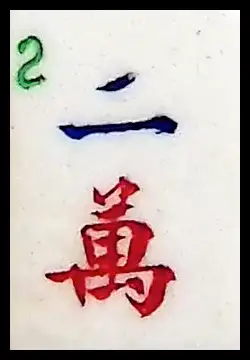
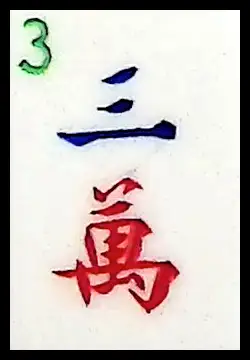
Bamboo, circles and characters
These are the suited numbered tiles (1 through 9):
- Bamboo - 1 through 9
- Circles - 1 through 9
- Characters - 1 through 9
Each of these tiles has four copies. These tiles form regular combinations (chows, pungs and kongs).
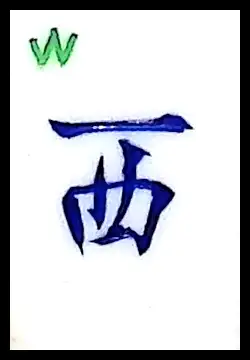
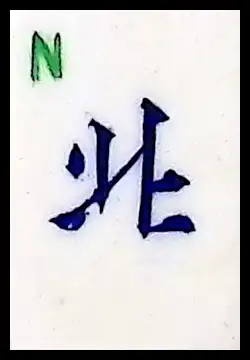
Wind tiles
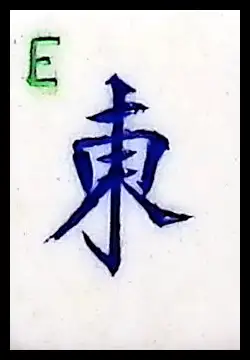
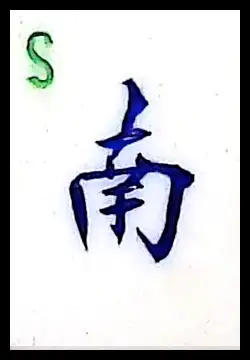
There are four wind tiles:
- East
- South
- West
- North
Each wind tile also has four copies.
Dragons
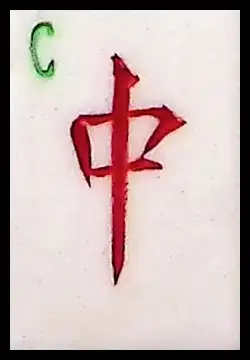
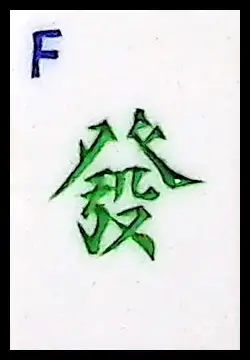
There are three dragon tiles:
- Red Dragon
- Green Dragon
- White Dragon
Each dragon tile has four copies.
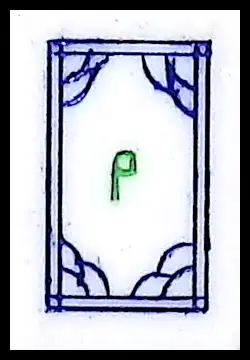
Flowers and seasons
The set also includes flowers and seasons. These tiles are not part of regular sets (chows, pungs, kongs), but are placed open in front of your rack.
In this app:
- A flower or season is worth 4 points.
- Your own flower or own season gives 1 doubling (x2) on your score.
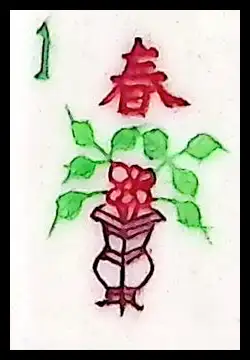
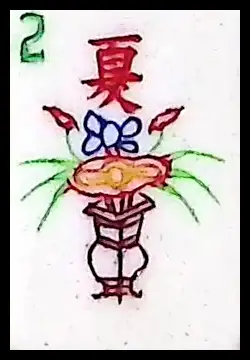
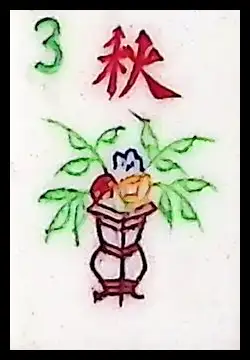
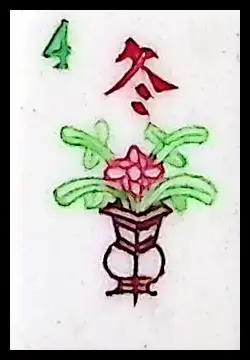
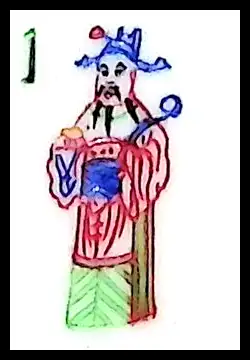
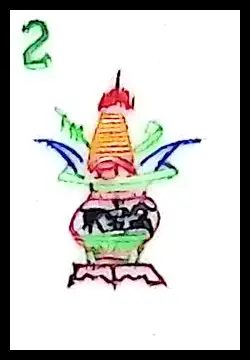
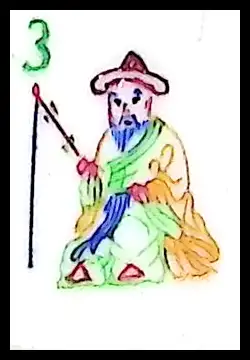
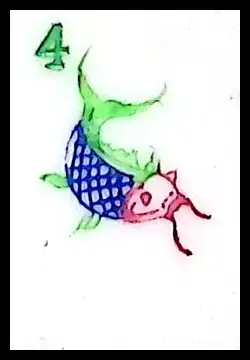
Flowers and seasons count for scoring, but are not counted inside your 14-tile winning structure.
Other game components
- Two dice - used to determine, among other things, the prevailing wind and the wall break location.
- Four racks - used to build walls and hold tiles.
- Wind markers - to indicate East, South, West and North seats.
Together, these form the complete material set for a Mahjong game.
The table and the players
Mahjong is played by four players. Each player has a fixed seat, represented by a wind.
Winds
The four seat winds are:
- East
- South
- West
- North
At the start of a session, dice determine who has which wind.
Turn direction
Play proceeds counterclockwise:
- East -> South -> West -> North -> East ...
Draws, discards and claim opportunities follow this fixed order.
Prevailing wind (this app's variant)
In addition to each player's seat wind, there is a prevailing wind. It affects scoring and wall opening logic.
In this app, the prevailing wind is determined for every game:
- East starts and rolls the dice to determine the prevailing wind. Count total pips starting from East and moving counterclockwise around all players.
- The player sitting at that resulting wind then rolls again to determine where the wall is broken.
In official NTS, prevailing wind normally remains fixed for four consecutive games. This app intentionally uses per-game prevailing wind to keep sessions shorter.
How winds rotate
After each game, players rotate seat winds:
- East becomes North
- North becomes West
- West becomes South
- South becomes East
Traditional explanations call a full round complete when each player has been East once. In this app, each game stands on its own and you can stop at any point. In practice, players often do 4 games so everyone is East once.
The basic structure of a hand
A Mahjong hand is built from sets of tiles. Those sets together form your complete winning hand.
What is a set?
A set is a valid tile group. In Mahjong, there are three set types, plus one pair.
Pung - three identical tiles
A pung is three identical tiles.
All three tiles are exactly the same.
Chow - three consecutive suited tiles
A chow is three consecutive tiles in the same suit (for example 3-4-5).
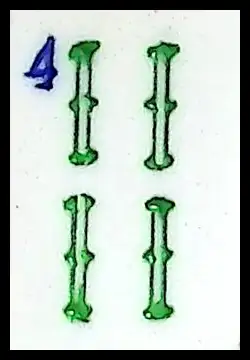
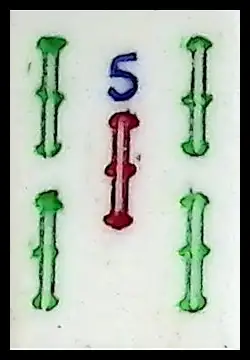
Chows can only be made with bamboo, circles and characters, never with winds or dragons.
Kong - four identical tiles
A kong is four identical tiles. It is like a pung with one extra tile.

Because a kong uses four tiles, you must always draw a replacement tile.
The pair
Besides sets, you need one pair: two identical tiles.
A pair is not a set, but it is required for a regular winning hand.
Example of a complete hand
A standard winning hand usually consists of:
- 4 sets (pung, chow or kong)
- 1 pair
Example:
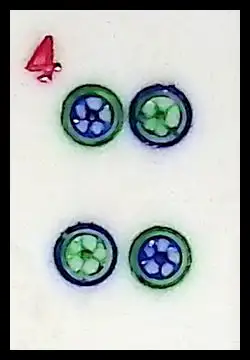
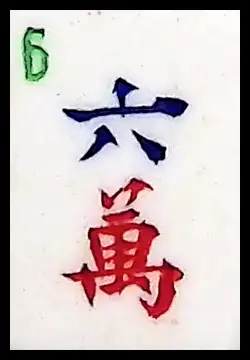
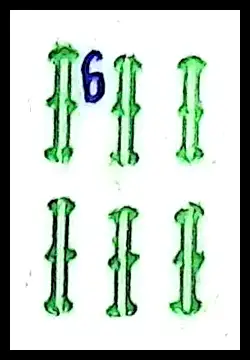
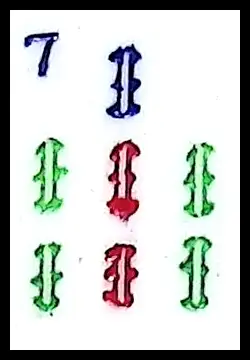
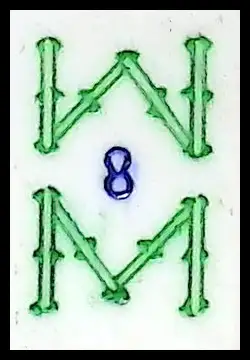
This is a valid winning hand: four sets plus one pair.
The start of the game
Before play begins, tiles must be built into walls and dealt. The sequence below explains the setup step by step.
Building the walls
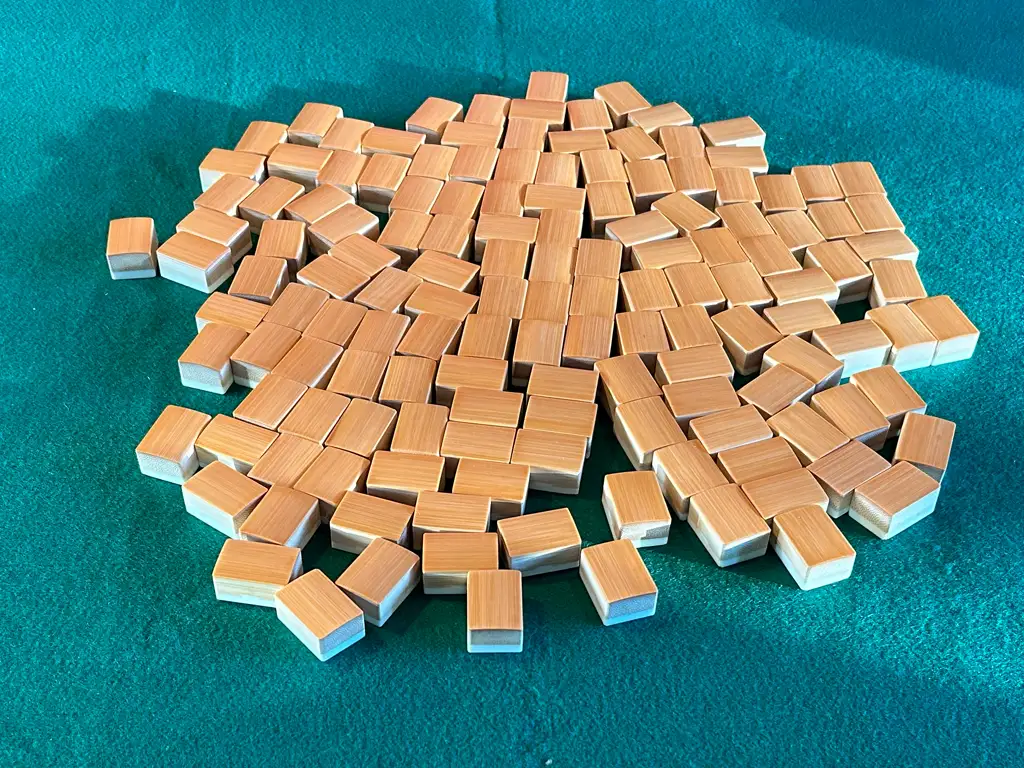
All 144 tiles are shuffled face down. Then each player builds a wall:
- 18 tiles long
- 2 tiles high
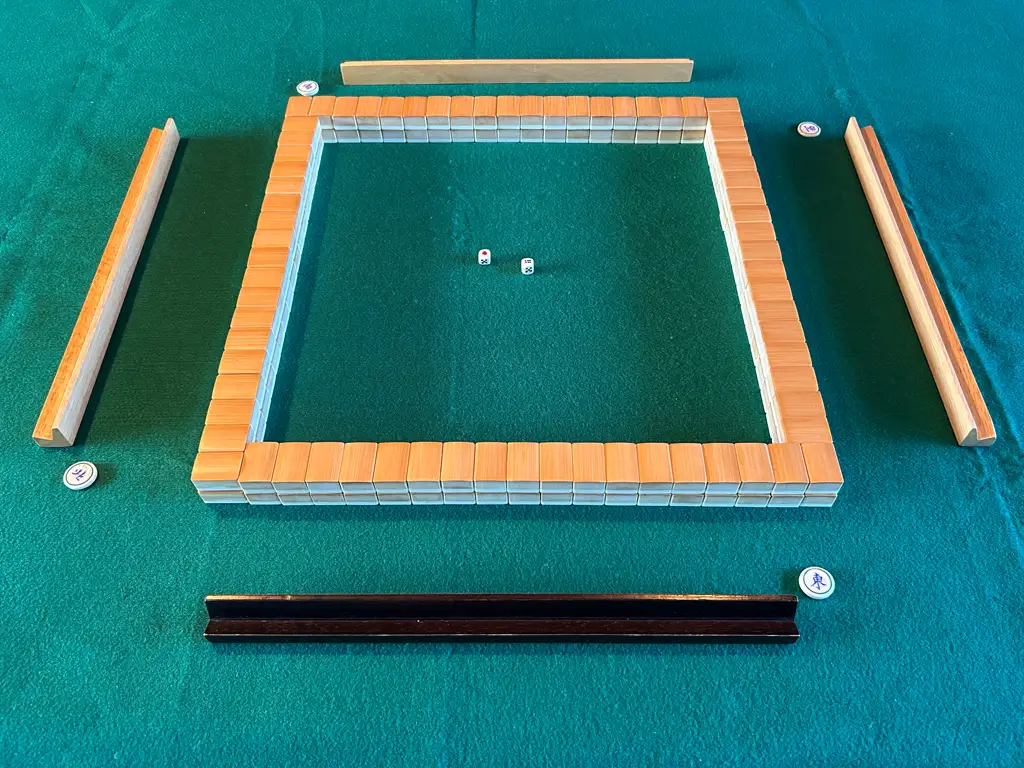
The four walls are pushed together into a closed square in the middle.
Who becomes East?
Before opening the wall, East is determined. Everyone rolls the two dice. Highest roll becomes East. Ties for highest are re-rolled among tied players. Remaining winds are assigned counterclockwise: South, West, North.
How is the prevailing wind determined?
Once walls are ready, East rolls to determine prevailing wind: count total pips counterclockwise from East. The resulting wind is the prevailing wind for that game.
Where is the wall broken?
The player at the prevailing-wind side rolls again to determine break position. The first two tiles are placed on top of the left side: this marks the dead wall. The right side remains open for dealing and drawing.
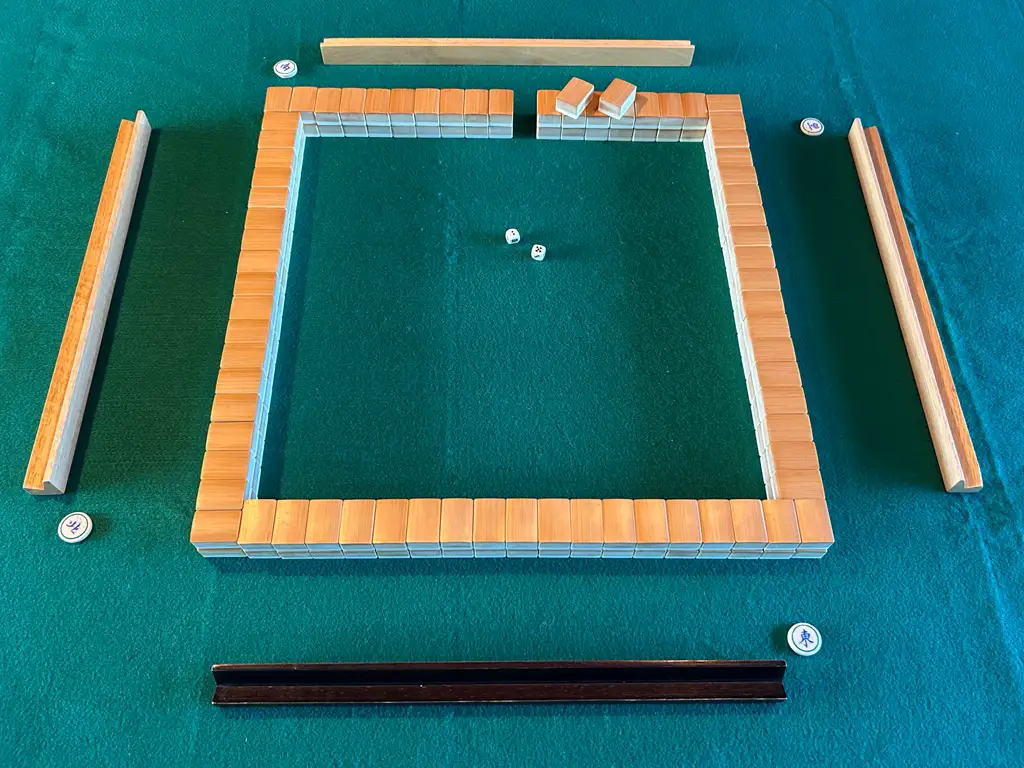
Dealing then starts: East takes four tiles first, then South, West, North. This happens three times. Then everyone takes one extra tile. Everyone has 13 tiles; East has 14 and starts.
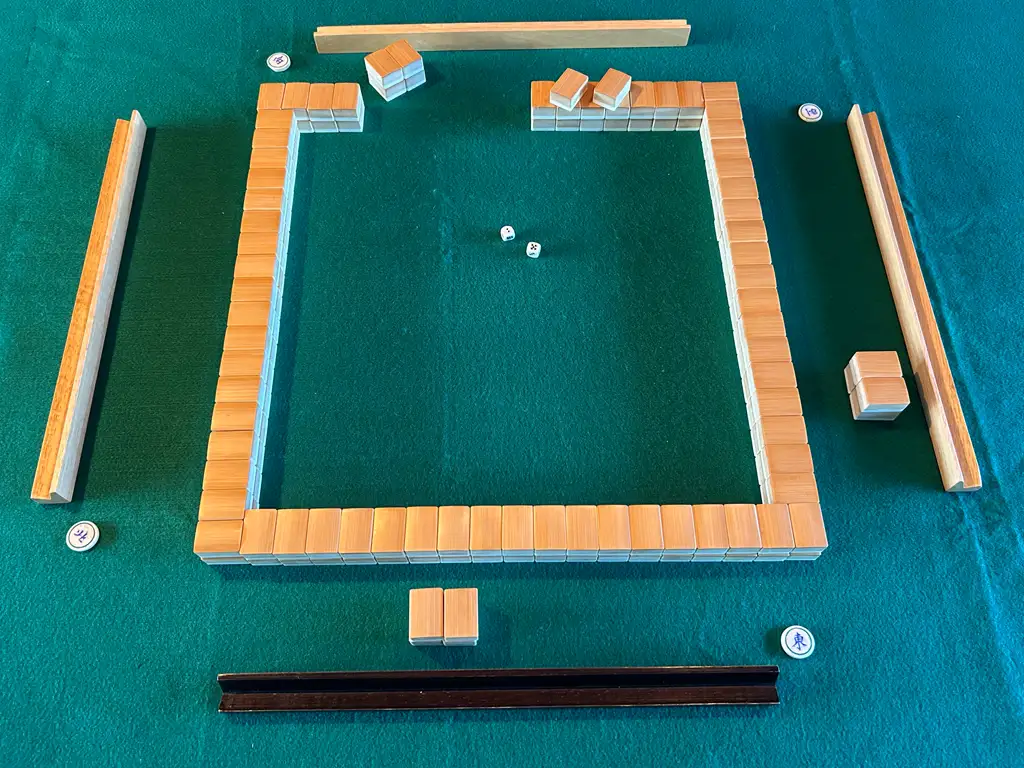
Tiles are now dealt
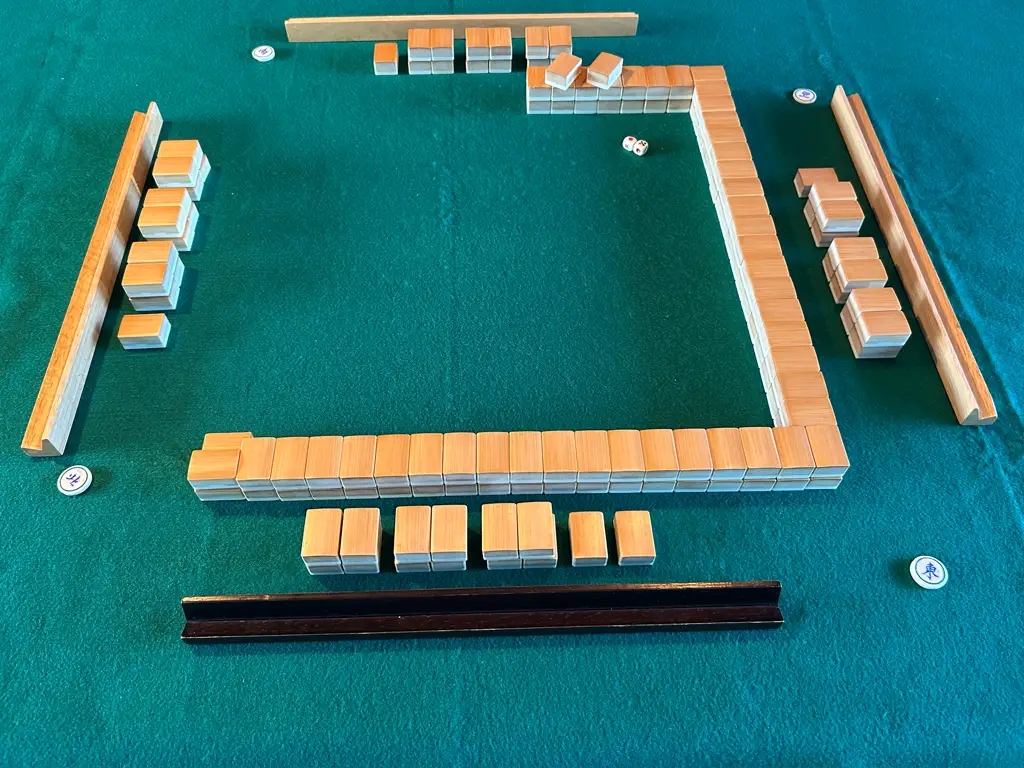
Dealing overview
After setup, each player has 13 tiles in hand.
East receives one extra tile and starts with 14 tiles.
Starting position
- each player keeps tiles upright and private
- the central wall is open for play
- East starts first with 14 tiles
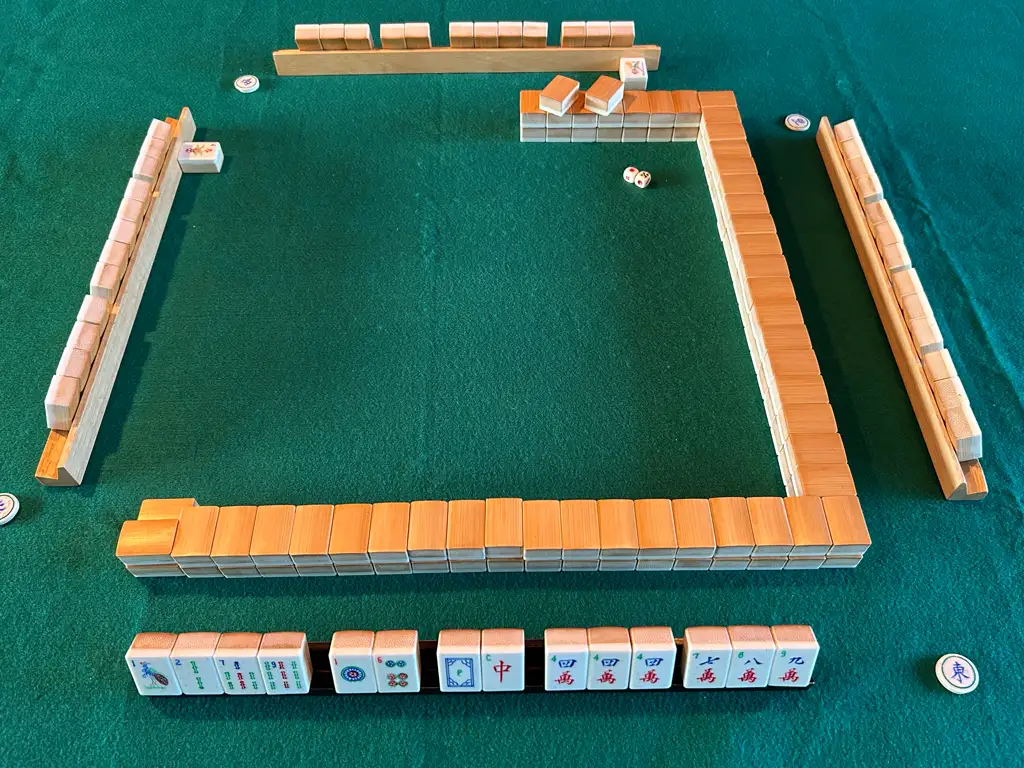
From here, play begins: draw, assess, discard, and build toward Mahjong.
Game flow
After dealing, each turn follows a fixed pattern. This section explains flowers/seasons, draw-discard flow, calls, and open versus concealed play.
Flowers, seasons and the dead wall
At game start, some players may hold one or more flowers or seasons.
Flowers/seasons are not kept in hand. Place them open in front and draw one replacement tile from the dead wall for each.
The dead wall starts with 14 tiles and is not refilled. In practice, players often make a small visual split in the wall after those 14 tiles.
Flowers and seasons at game start
- East resolves flowers/seasons first, then South, then West, then North.
- For each flower/season, draw one replacement from the dead wall.
- If replacement is also flower/season, place it open and replace again immediately.
Only after all replacements are complete does East make the first discard.
Flowers and seasons during play
- draw flower/season -> place open immediately
- draw one replacement from dead wall
- if replacement is flower/season again, repeat
If the dead wall is exhausted, the final two tiles from the live wall may be used if needed (rare).
Basic turn pattern: draw and discard
- Active player draws one tile from the live wall.
- Player checks for possible declarations (for example Mahjong or kong).
- Player discards one tile to the center.
After a discard, other players can claim it (chow, pung, kong or Mahjong) depending on what they can legally form.
Calls: chow, pung, kong and Mahjong
Chow
A chow is three consecutive suited tiles.
- Only the next player in turn order may call chow.
- Chow is only possible with bamboo/circles/characters.
- Claimed tile and set are placed open in front of the rack.
Pung
A pung is three identical tiles.
- Any player may call pung on the most recent discard.
- Pung has priority over chow.
- Set is placed open in front of the rack.
Kong
A kong is four identical tiles.
- Can be made from a discard (like pung).
- Can extend an existing open pung.
- Can be declared concealed from four self-held identical tiles.
- Always draw one replacement tile from the dead wall after declaring a kong.
Mahjong
If the most recent tile completes your valid hand, you may call Mahjong.
- Mahjong has top priority over chow/pung/kong.
- Winning hand is opened and the game ends immediately.
Open versus concealed play
Sets made with claimed discards are open. Sets made only from self-drawn tiles can remain concealed.
-
Open set - visible on the table, made using a discard.
-
Concealed set - made from self-drawn tiles.
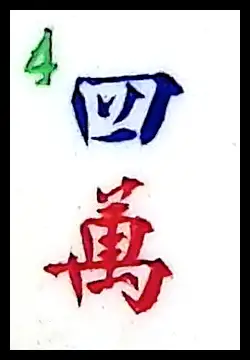
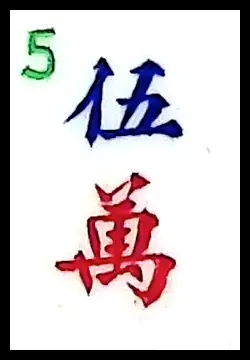
Concealed sets are often worth more than open sets in scoring. A fully concealed hand can yield additional doubling bonuses.
A concealed pung can remain hidden in hand. A concealed kong must still be declared and shown on the table (with middle two tiles turned for scoring indication), then replaced from the dead wall.
Turn order and priority
- Mahjong always has highest priority.
- Pung/kong have priority over chow.
- Chow is lowest priority and only available to the next player.
If no one claims, play continues normally with the next player drawing and discarding. If the live wall is exhausted without a winner, the game is a draw (remise).
Making Mahjong (win)
When can you call Mahjong?
You may call Mahjong when one tile completes a valid full hand. This is a waiting hand: you are exactly one tile short.
You may win in two ways:
- self-drawn winning tile from the live wall
- another player's discard completes your hand
A regular winning structure is usually 4 sets + 1 pair. Special limit hands use different structures.
The correct tile count
- 13 tiles before your draw
- 14 tiles right after your draw
- back to 13 after discarding
Any legal winning reveal ends on a structurally correct 14-tile hand (or valid special hand format).
Illegal Mahjong (dead hand)
An invalid Mahjong claim results in a dead hand. The game continues, but that player cannot win this game and scores 0.
- wrong hand structure
- wrong tile count
- invalid set logic
Special situations
The dead wall
The dead wall has 14 tiles and is reserved for:
- flower/season replacement
- kong replacement draws
If needed and empty, dead-wall logic can be completed from the last live-wall tiles.
Wall exhaustion (draw/remise)
If no one wins and the live wall is empty, the game is a draw.
- no Mahjong winner
- no point calculation for that game
- new game starts with reshuffle
Mistakes and wrong calls
Small non-impact mistakes usually do not kill a hand, but invalid claims and invalid hand state do.
Dead hand
- no Mahjong possible for that player in this game
- player scores 0 in that game
- game continues for others
Wrong or late call
- Mahjong has top priority
- Pung/kong over chow
- higher-priority call prevails in conflicts
Scoring (NTS)
Basic scoring principle
- You score points for combinations (pungs, kongs, special pairs).
- You gain doublings (x2) from special hand patterns and events.
- Base points are added first, then doublings are applied.
- Some special hands use a fixed limit score.
- East pays and receives double in settlement.
Settlement is based on score differences between all players. The winner does not automatically pay or receive from only one side; all net differences are settled.
Base points for combinations
Chows score no base points in NTS. Pungs and kongs do. Value depends on open/concealed and on tile category.
Pungs and kongs (overview)
- Pungs of simple tiles (2-8) are lower value than terminals/honors.
- Kongs score more than corresponding pungs.
- Concealed sets score more than open sets.
Mahjong itself
Completing a valid winning hand grants a fixed base bonus in addition to set points.
Flowers and seasons (rule in this app)
- Each flower or season = 4 points.
- Own flower/season = 1 doubling each (x2).
Doublings (multipliers)
Every doubling multiplies the total again by 2. Examples include dragon pungs, own/prevailing wind pungs, clean/pure hand patterns, and fully concealed structures.
Example of a simple score
Example hand
Step 1 - Base points
- Chows: 0
- Open East pung: 4
- Concealed Red Dragon pung: 8
- Bamboo 8 pair: 0
- Mahjong bonus: 20
- Self-drawn win: 2
Subtotal: 34 points.
Step 2 - Doublings
- Dragon pung: 1 doubling
- Own wind pung (East): 1 doubling
34 x 2 x 2 = 136 points.
Step 3 - Settlement
Final settlement depends on seat/wind conditions, especially East double-pay/double-receive behavior.
Points - Regular base score
Most regular Mahjong hands are scored by base points plus at least 2 doublings.
- Flowers and seasons
- Each flower+4 points
- Each season+4 points
- Pungs (three identical)
- Simple tile pung (open)+2
- Simple tile pung (concealed)+4
- Terminal/honor pung (open)+4
- Terminal/honor pung (concealed)+8
- Kongs (four identical)
- Simple tile kong (open)+8
- Simple tile kong (concealed)+16
- Terminal/honor kong (open)+16
- Terminal/honor kong (concealed)+32
- Pairs
-
Pair of dragons+2 points
Only when the pair consists of dragons.
- Winning bonuses (Mahjong)
-
Mahjong (winning hand)+20 points
Bonus for completing a valid hand.
-
Win with only possible tile+2 points
The winning tile completed only one specific structure.
-
Self-drawn winning tile+2 points
Winning tile was drawn from wall, not claimed from discard.
-
Winning tile completes the pair+2 points
-
Pe-ling eats cake+10 points
Win with Circle 1 while Bamboo 1 forms your pair.
Doublings (multipliers)
After base points are counted, one or more doublings may apply.
Each doubling multiplies again by 2.
At least 2 doublings are required to claim Mahjong in this app.
- Winds and dragons
- Pung/kong of own wind1 doubling
- Pung/kong of prevailing wind1 doubling
- Pung/kong of dragons1 doubling
- Hand structure
-
Fully concealed hand2 doublings
Concealed until and including the winning tile.
-
Little four winds1 doubling
Wind pungs + wind pair + one random pung/chow.
-
Little three dragons1 doubling
2 dragon pungs + dragon pair + 2 random sets.
-
Four chows (poverty Mahjong)1 doubling
-
Four pungs1 doubling
-
Pure simplicity1 doubling
Only tiles 1 through 8.
-
Clean hand1 doubling
One suit + winds and dragons.
-
Very clean2 doublings
Winds/dragons with ones and nines of one suit.
-
Pure3 doublings
One suit only, or honors only.
- Special sets
- Three concealed pungs1 doubling
- Three concealed kongs2 doublings
- Four concealed pungs2 doublings
- Four kongs3 doublings
- Winning moments
- Last tile of live wall1 doubling
- Last tile is Circle 13 doublings
- Kong with flowering flowers1 doubling
- Kong with flowering flowers - Circle 53 doublings
- Robbing the kong1 doubling
- Kong on kong2 doublings
- App-specific NTS deviations
- Own flower1 doubling
- Own season1 doubling
First add base points. Then apply all doublings. East pays and receives double during settlement.
Points - Limit hands
Below are all 18 limit hands from NTS. A limit hand gives a fixed high score regardless of normal base points. (Flower/season doublings do not add to limit-hand value.)
Irregular limit hands (concealed on the rack)
-
Nine Gates (2000 points)
- All tiles from one suit
- Three pungs of ones
- Three pungs of nines
- At least one tile of each from 2 through 8
- Plus one extra tile from that same suit
-
Thirteen Orphans (2000 points)
- One tile of each 1 and 9
- Each wind
- Each dragon
- Plus one extra tile from this set
-
Wind Snake (1000 points)
- Tiles 1 through 9 of one suit
- One tile of each wind
- One extra tile (1-9 or a wind)
-
Dragon Snake (1000 points)
- Tiles 1 through 9 of one suit
- One tile of each dragon
- A pair of winds
-
Imperial Court (1000 points)
- Tiles 1 through 7 of one suit
- One tile of each wind
- One tile of each dragon
-
Honor Twins (2000 points)
- Seven pairs consisting only of winds and dragons.
-
Pure Twins (1000 points)
- Seven pairs all from one suit
-
Very Clean Twins (1000 points)
- Seven pairs built from:
- Winds
- Dragons
- Terminal tiles (1 and 9) of one suit
-
Clean Twins (500 points)
- Seven pairs built from:
- Winds
- Dragons
- Other tiles from one suit
-
Seven Twins (250 points)
- Seven arbitrary pairs (any suit/value)
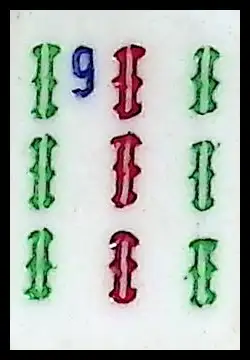
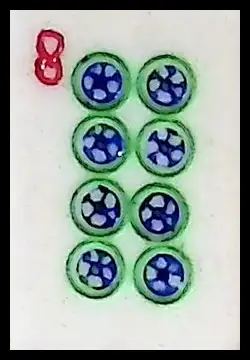
Regular limit hands (open or concealed)
-
Four Winds (2000 points)
- Four wind pungs/kongs
- Any pair
-
Three Dragons (2000 points)
- Three dragon pungs/kongs
- One extra set (chow or pung)
- Any pair
-
Jade Hand (2000 points)
- All sets use green bamboo tiles (2, 3, 4, 6, 8)
- Green dragons may also be included
-
Heavenly Hand (2000 points)
- East has immediate Mahjong with the initial 14 tiles, without drawing and without any discard.
-
Four Concealed Kongs (2000 points)
- Four fully concealed kongs in one hand
- Any pair
This is the only regular limit hand that must be played concealed.
-
Head and Tail (2000 points)
- Pungs of ones and nines
- A pair of 1 or 9 in the same suit
-
Earth Hand (1000 points)
- A player other than East wins on East's very first discard.
-
Winding Snake (1000 points)
- 3 possible one-suit forms:
- pung 1 and 9 + chow 3,4,5 and 6,7,8 + pair of 2
- pung 1 and 9 + chow 2,3,4 and 6,7,8 + pair of 5
- pung 1 and 9 + chow 2,3,4 and 5,6,7 + pair of 8